


GPSR for Print-on-Demand: Who's the Manufacturer, Printful or You?
Under GPSR, the print-on-demand seller who adds their own design is the manufacturer. Here's what Printful and Printify handle, what you must add, and how to stay white-label.
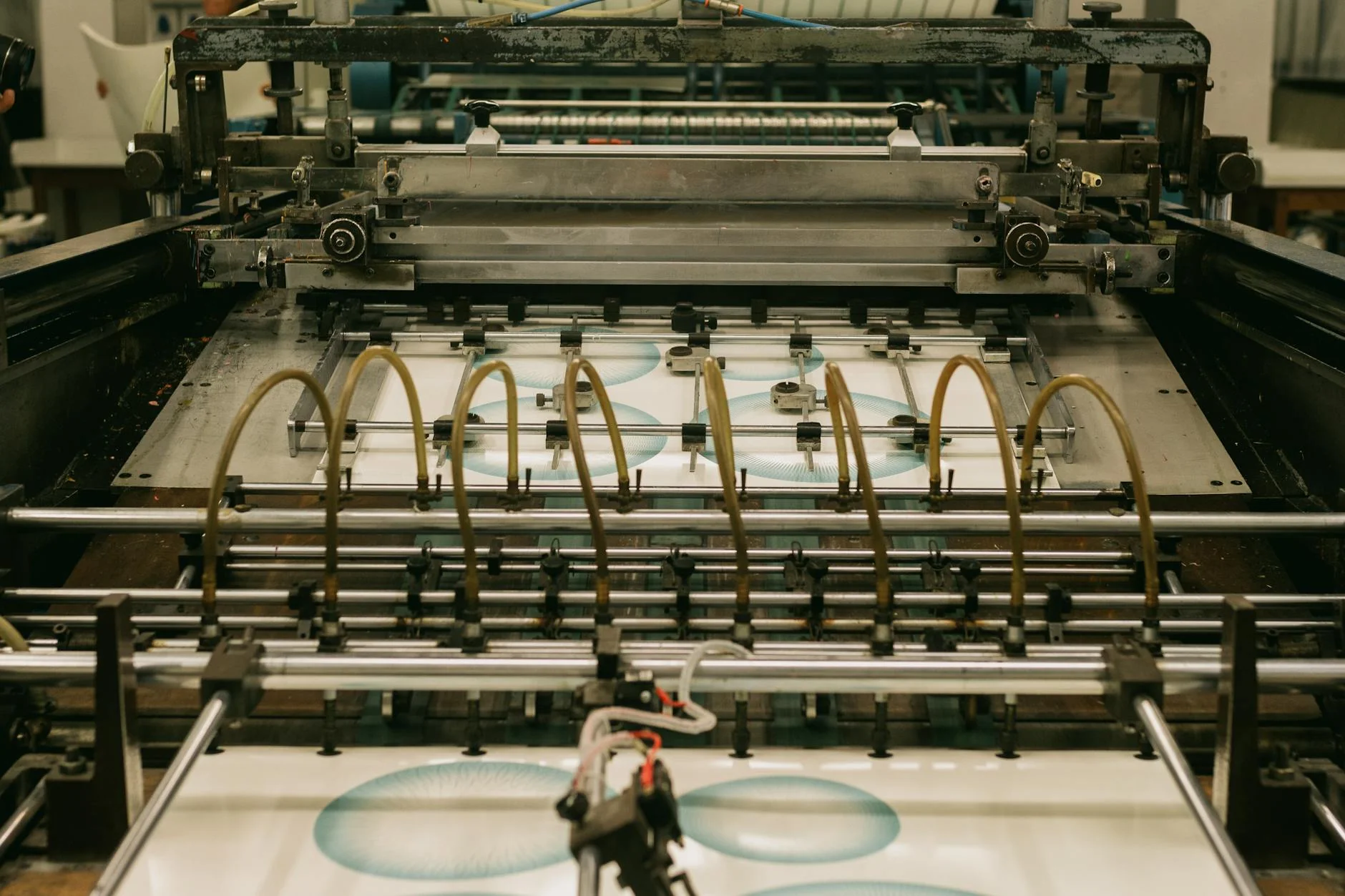
You upload a design. Printful or Printify prints it, packs it, and ships it straight to your customer. You never see the blank, never touch the ink, never hold the finished shirt. So when an EU customer buys it, who is the manufacturer?
Under the General Product Safety Regulation, the answer is you. Not Printful. Not Printify. Not Gelato. The moment you put your own brand, logo, or design on a blank product, GPSR classifies you as the manufacturer, with every obligation that comes with it. The print provider is your supplier. You are the brand on the hook.
This is the central knot of print-on-demand compliance, and it confuses almost everyone who sells this way. You hold the legal liability of a factory you've never visited.
The brand-as-manufacturer rule
GPSR draws the line by who the product looks like it came from. If a buyer sees your shop name, your design, and your branding, you are the manufacturer in the eyes of the law. The factory that physically made it is irrelevant to that question.
For POD this creates a real problem. You can't inspect the blanks. You can't verify the chemistry of the inks against the chemical limits in REACH, a separate EU regulation, or check the dyes. You can't walk the production line. Yet you carry the manufacturer's duty to prove the product is safe and to back it with documentation.
The way through is coordination. You lean on your print provider for the safety data you can't gather yourself, then you map that data onto your listings correctly. Printful puts it plainly in their own help docs: "Every product listing visible to EU customers must include manufacturer's contact details and/or the details of a responsible person in the EU." That obligation lands on you to execute, even if the data originates with them.
What the POD platforms actually cover
The big providers have built tooling for this, and it's worth knowing exactly where their help stops.
Printful, according to a third-party compliance blog, acts as the EU Authorised Representative for the products they fulfill and offers ready-to-use compliance and safety details you can drop into listings. Confirm the current scope of that role in Printful's own help docs before you rely on it. For sellers outside the EU, they provide a default EU contact entity called Sinden Ventures. Their guidance to merchants is blunt: "Update your EU product listings as soon as possible to avoid disruptions and maintain compliance."
Printify offers a similar path. If you don't have an EU or Northern Ireland address, you can use Printify's affiliate contact information instead. Their docs describe it directly: "We provide default contact of our affiliate information to ensure you meet GPSR requirements." But they're equally clear about where responsibility sits: "You, as the seller or store owner, are responsible for ensuring your products comply with GPSR. Printify provides tools and information to help, but final compliance is up to you."
That last line is the whole game. The platform hands you data and a checkbox. The legal duty stays yours.
GPSR has been the live standard since December 13, 2024. Printful's own summary states it "requires all non-food consumer products sold to customers in the EU to be safe and sets specific obligations for businesses to prove this." If a custom item is manufactured and shipped after that date, it must comply, no matter when the order was placed.
The white-label dilemma
Here's the tension that bites most POD brands. To stay compliant, you have to display the physical address of an EU contact, your Responsible Person, on the product or its listing. The free option is your provider's default affiliate address.
The problem: that address is publicly tied to Printful or Printify. Anyone who looks it up can see who actually fulfills your orders. For a brand built on the impression that you make your own products, that quietly breaks the illusion.
You have two real choices, and they trade cost against secrecy.
- Use the supplier's default affiliate Responsible Person. Cost is €0. The catch is exposure: your supplier's corporate identity becomes visible. Printify even frames its own paid option around this, noting you can "enter your EU or Northern Ireland address as well" if you "want to continue benefiting from the white-label solution."
- Appoint an independent EU Responsible Person. This runs roughly €500 to €1,500 per year as an annual subscription. The independent contact hosts your technical documentation and acts as the official EU point of contact, with no link back to your print provider. Your white-label stays intact.
If your brand identity matters to your margins, the independent route is usually worth the spend. If you're testing a store and don't care who knows it's POD, the free affiliate address keeps you legal on day one. Either way, see our breakdown of the Responsible Person role before you decide.
The metadata trap that suppresses compliant-looking listings
This is the mistake that catches sellers who think they're done. POD dashboards let you append GPSR information directly to the product description. You check the box, the text appears, you assume you're covered. Printify describes the action exactly that way: "Check the General Product Safety Regulation box to include the product information in the product description."
But Amazon, eBay, and Etsy don't read your description for compliance. They demand the manufacturer and Responsible Person details in structured metadata fields, separate from the description block. Their automated enforcement scans those fields. If they're empty, the listing gets flagged and suppressed, even though your description is full of the right information.
So the description and the metadata are two separate jobs. Do both. Push the GPSR text from your POD dashboard, then go into each marketplace and fill the dedicated economic-operator and safety fields by hand. Printful's Etsy guidance reflects this: "Update each product listing and add an EU-based economic operator in your shop settings."
The bulk-edit bottleneck
If you have a large catalog, brace for friction. Printify caps GPSR description updates at small batches. Their docs spell it out: "Select the product(s) you want to update with the GPSR product information (up to 24 at a time)."
Twenty-four SKUs per pass. If you run a catalog of several thousand designs, that's a grind measured in days, not minutes. Plan for it. Batch by collection, work the highest-selling SKUs first, and don't assume a single sync will clear your whole store. Pushing updates from a POD dashboard to Etsy or Shopify can also throw sync errors, which silently leave active listings non-compliant. Spot-check after every push.
Labeling: every single unit
A common misread: because POD items are printed one at a time, sellers assume they're exempt from physical tracking labels. They aren't. Under GPSR, every shipped unit must carry legible traceability identifiers and Responsible Person contact details.
Article 9(5)–(7) gives you flexibility on where those details sit. They can go on the product itself (a sewn-in label or direct print), on the packaging (a sticker or polybag), or on an accompanying document like an insert or invoice. For apparel, a sewn-in label is preferred, but a hang tag or packaging sticker is acceptable when direct labeling isn't practical. Custom hang-tag printing runs roughly €0.15 to €0.50 per unit, so factor it into your unit economics.
For a canvas print, the print, its packaging, or its invoice needs a unique identifier such as a SKU or batch number, plus your manufacturer details. A QR code can be a helpful extra for delivering longer manuals, but it does not replace the printed core details. The manufacturer and Responsible Person information must be physically present on the item, packaging, or insert.
Language is not optional
Many sellers assume an English-language store means English-only listings are fine. It isn't. Any listing visible to EU buyers must show safety and handling instructions in the official language of each country where the product is sold. Sell into France and Germany, and your warnings need French and German.
Not every product needs warnings, though. A standard custom-printed ceramic mug generally carries no specific safety warning, so you can honestly select "no warnings required" on a compliance attestation. Match the warning to the actual risk. Don't invent warnings, and don't skip them where they belong.
The two-year warranty nobody budgets for
Separate from GPSR but bundled into the same EU selling reality: Directive 2019/771 guarantees consumers a two-year warranty covering repair, replacement, or refund on defective goods. POD margins are thin, and a wave of warranty claims on custom-printed items can erase your profit for the period.
Two defenses. First, set aside a reserve, typically 2% to 5% of gross revenue, so claims don't hit your operating cash. Second, confirm your print provider covers manufacturing defects under their own quality guarantee, so a faulty blank becomes their problem to fix, not just yours to refund.
Your technical file
As the manufacturer, you're expected to hold a technical file you can produce if an authority asks. For POD it should contain product photos, a description of the materials (fabrics, inks, dyes), the safety test documents your print provider can supply, and a risk assessment. You don't publish this file. You keep it and hand it over on request.
If assembling that paperwork sounds like the part you'll put off forever, that's exactly what we built EUProof for. You answer questions about your product and we generate the GPSR documents, including the technical file structure and declaration. We do not act as your EU Responsible Person, so you'll still need to appoint one separately, but the document burden gets a lot lighter. Start with the templates or check the pricing.
A clean order of operations
If you're starting from a non-compliant POD store today, the path is short. Accept that you're the manufacturer. Pick your EU contact, free affiliate or paid independent. Gather safety data from your provider into a technical file. Update both descriptions and marketplace metadata. Label every unit and translate warnings by country. Not sure GPSR even applies to what you sell? Run our quick Am I affected? check first.
For the platform-specific wiring, our Etsy GPSR guide and dropshipping guide cover the field-by-field details that overlap heavily with POD.
This article is general guidance, not legal advice. Confirm your obligations with a qualified advisor or your Responsible Person.
Step by step
Confirm who the manufacturer is
If you add your own design, logo, or brand to a blank, you are the manufacturer under GPSR. Accept that you carry the manufacturer obligations even though you never touch the product.
Choose your EU contact
Decide between your provider's default affiliate Responsible Person (free, but exposes the supplier) or an independent Responsible Person (paid, keeps you white-label). List that contact on every EU-facing listing.
Collect safety data from your print provider
Request material descriptions, ink and dye data, and any test reports for the blanks. Store them in a technical file with product photos and a risk assessment.
Add details to listings AND marketplace metadata
Update product descriptions through your POD dashboard, then enter the same manufacturer and Responsible Person details into the structured GPSR metadata fields on Amazon, eBay, and Etsy. The description alone will not stop a suppression flag.
Label every shipped unit
Make sure each unit carries a unique identifier (SKU or batch number) plus manufacturer details on the item, packaging, or an insert. Translate safety warnings into the language of each country you sell to.
Frequently asked questions
- Who is legally the manufacturer of a custom print-on-demand product under GPSR?
- The store owner who puts their own design or branding on the blank product is the legal manufacturer. Even though Printful, Printify, or Gelato physically print and ship the item, GPSR treats the person whose name and design appear on it as the manufacturer with full obligations.
- How can a non-EU POD seller stay white-label and still comply with GPSR?
- Hire an independent EU Responsible Person and list that contact instead of your print provider's affiliate details. Using a supplier's default affiliate address (like Printful's Sinden Ventures or Printify's affiliate contact) keeps you compliant but exposes which provider fulfills your orders.
- Do POD apparel products need sewn-in labels, or are hang tags enough?
- Sewn-in labels are preferred, but hang tags or stickers on the packaging are legally acceptable alternatives when direct labeling is impractical. Article 9 puts the traceability and contact details on the product, its packaging, or an accompanying document.
- How do POD sellers manage the mandatory EU two-year warranty?
- Set aside a financial reserve for returns, typically 2% to 5% of gross revenue, and confirm your print provider covers manufacturing defects under their own quality guarantee. EU Directive 2019/771 requires a two-year warranty for repair, replacement, or refund on defective goods.
- Does Printify's affiliate compliance option work on channels other than Etsy?
- Yes. The affiliate contact details Printify provides can be entered manually into compliance fields on other sales channels, including Shopify and eBay, not just Etsy.


Get your GPSR documents in minutes.
Add your product, pick the languages, download the technical file, risk assessment, and label. No legal team required.
Start freeSee pricingSee a sample pack