



GPSR labeling is the part of compliance you cannot fake with a PDF in a drawer. Customs officers and marketplace bots read the physical label and the online listing, and when the two disagree, the shipment stops or the listing goes dark. Under the General Product Safety Regulation (EU 2023/988), every consumer product sold into the EU and Northern Ireland has to carry clear, legible, indelible traceability details. This guide lays out exactly what those details are, where to put them when the product is tiny, and the two mistakes that get sellers flagged most often.
What a compliant label actually contains
Strip away the jargon and a GPSR label is four pieces of information. One seller summed up the whole regime in a sentence: "The regulation requires that products, packaging, and accompanying documents include unique numbers, company information, and safety instructions." That is the shape of it. Here is each piece.
A product identifier. Under Article 9 (9(5)-(7)), each product must display a type, batch, serial, or model number, or another element that enables its identification. The point is traceability: if a defect surfaces, authorities need to pin down which production run to recall. A SKU, model number, batch code, serial number, or GTIN (EAN/UPC) all work.
Manufacturer details. "Manufacturers must indicate their name, registered trade name or trademark, and both postal and electronic addresses." The electronic address is not a contact form buried three clicks deep. It has to be a direct email or a specific URL that lets a consumer reach you.
Responsible Person details. If the manufacturer sits outside the EU, the label also has to show the EU-based Responsible Person: name, postal address, and email or URL, clearly marked as the EU Representative or EU RP. A seller put the dependency plainly: "if you yourself do not have an establishment in the EU you must appoint an agent representative to be it." EUProof generates the documents that reference your RP, but it does not act as your Responsible Person. You appoint that party separately. If you have not yet, start with our guide to the GPSR Responsible Person.
Warnings and safety instructions. These come out of your risk assessment, not a template. They must be specific to the actual hazards of the product, and they must be translated (more on that below).
Where to put it when the product is too small
Jewelry, small toys, and slim accessories rarely have room for a manufacturer's full postal address. The regulation anticipates this. "This labeling can be attached to the product, its packaging, or an accompanying document." And again: "If the product's size or nature makes this impractical, the information can be provided on the packaging or in an accompanying document."
So the hierarchy is: try the product first, then the packaging, then an accompanying document such as an insert card, a manual, or even the printed packing slip. The obligation never vanishes because the item is small; it just moves to the next available surface. For a deeper dive on the awkward cases, see our guides on GPSR for jewelry and GPSR for small businesses.
One practical note for readability. The mandatory safety text should generally meet a minimum character height of about 1.2 mm. A reduced 0.8 mm is permitted only on exceptionally small packaging or products. "Indelible" matters too: the print or engraving has to stay readable over the product's normal life, so a sticker that peels off in a week does not pass.
The QR code mistake
The single most common misconception: that a QR code linking to a web page satisfies the label. It does not. A QR code is a useful addition, never a replacement. The rule is explicit: "If you're using a QR code, you must also make the information available in text form, printed on the product, its packaging, the parcel, or an accompanying document."
So hosting your safety warnings on your website and printing only a QR code on the box leaves you non-compliant. The manufacturer details and warnings have to exist as printed text somewhere a consumer can read without a phone. Use the QR code for the extended version if you like, but print the core text first.
Language: one label rarely covers the EU
English-only does not work across the bloc. "Per Article 22, all warning and safety information must be presented in a language easily understood by consumers in the member state where the product is marketed." Sell into France, Germany, and Poland and your warnings need French, German, and Polish. This is the multilingual overhead that drives up print costs and creates packaging variants, and there is no shortcut around it for the safety-critical text.
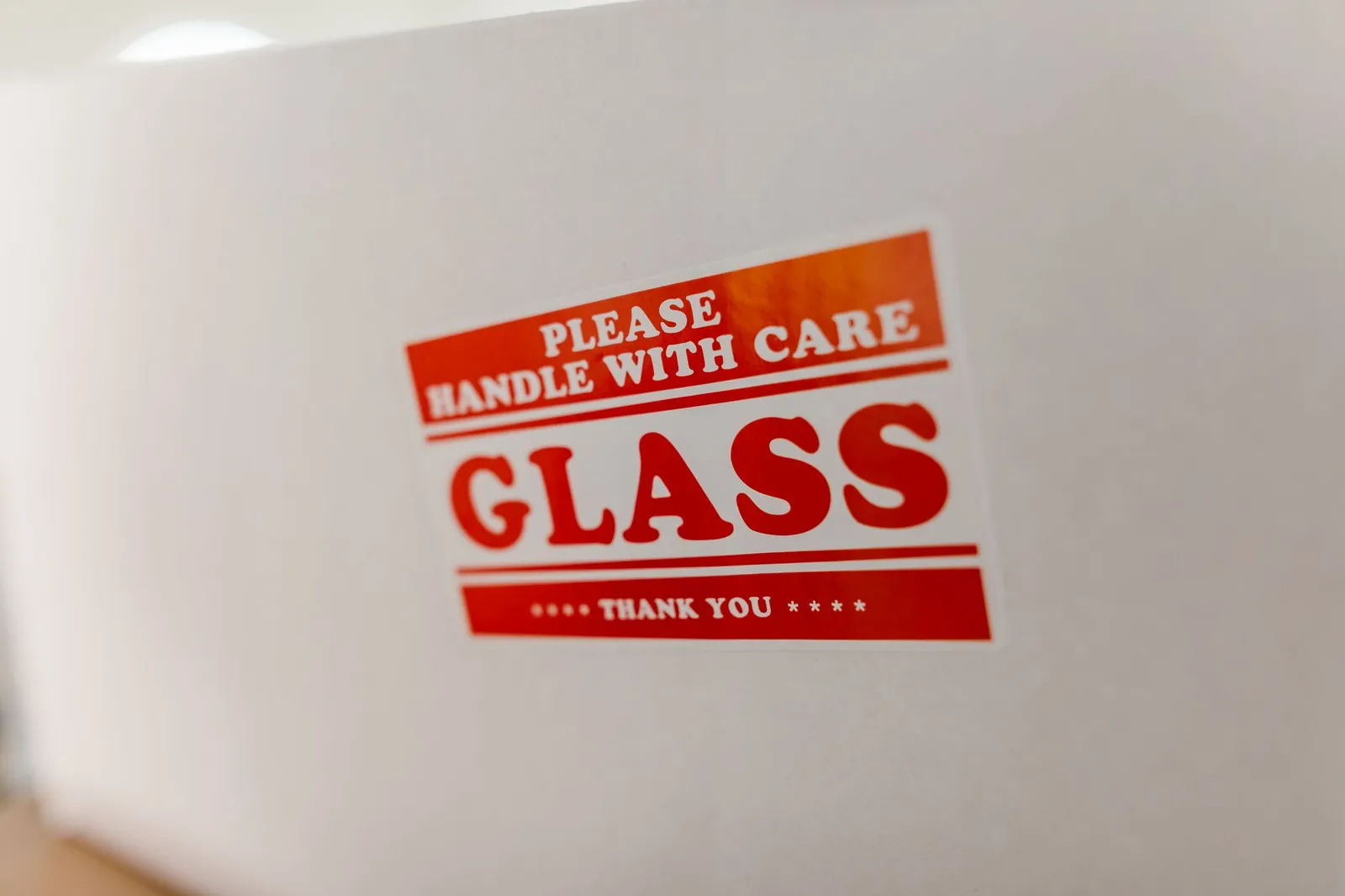
A second translation trap: generic warnings. "Handle with care" or "use responsibly" satisfy nothing. Warnings have to be specific to the product's real risks, drawn from your risk assessment, and then translated. A vague line in three languages is still a vague line.
The online listing has to match
GPSR labeling is not only physical. Under Article 19, the manufacturer details, product identifiers, and safety warnings all have to appear on the online product listing too, visible before purchase. That creates an alignment problem that quietly suppresses more listings than anything else.
Marketplaces enforce this differently. Etsy lets sellers add safety details in a general shop-level section. Amazon's backend is stricter: it asks for six-sided product images showing the CE mark (where applicable), the model number, and the manufacturer address before a listing is approved. If your packaging photos show one manufacturer address and your listing metadata shows another, or the model number on the box does not match the field you typed, that mismatched manufacturer metadata can get the listing deactivated. Match the printed identifier to the listing identifier, exactly. Our platform-specific guides cover the quirks for Amazon and Etsy.
CE mark vs GPSR labeling
A frequent mix-up. The CE mark is not a GPSR requirement. It applies only to products covered by specific EU harmonisation directives, such as electronics and toys. General consumer goods like clothing and furniture carry no CE mark, yet they still owe the full set of GPSR labeling: identifier, manufacturer details, RP details, and warnings. If you sell across both worlds, our breakdown of GPSR vs CE marking untangles which products need which mark.
What goes wrong, and what it costs
Get the label wrong and the consequences are concrete. Market surveillance authorities can seize shipments at customs, issue fines, mandate recalls, and order marketplaces to take listings down. None of that is theoretical; the customs check and the marketplace bot are the two gates every product passes through.
The fixes are mostly mechanical. Print the four pieces of information, place them where they stay legible, translate the warnings per destination country, and mirror everything on the listing. Books and printed matter are not exempt either: imprint-page or back-cover details apply, as covered in our GPSR for books guide.
If you want the label content generated for you from your product data, EUProof builds the document set and label text you print. See the GPSR compliance tools overview, or check whether you are in scope with our Am I affected? tool. Just remember the one line you cannot outsource to software: appoint your Responsible Person, because the label has to name a real one.
This article is general guidance, not legal advice. Confirm your obligations with a qualified advisor or your Responsible Person.
Step by step
Print the product identifier
Add a type, batch, serial, or model number to the product or its packaging so a specific unit can be traced in a recall. A SKU, GTIN (EAN/UPC), or batch code all qualify, as long as the printed value matches the identifier you submit to the marketplace.
Add the manufacturer's details
Show the manufacturer's name, registered trade name or trademark, and both a postal address and an electronic address (a real email or a specific URL). Generic contact pages do not count; the electronic address must let a consumer reach you directly.
Add the Responsible Person's details
If the manufacturer is outside the EU, display the EU-based Responsible Person's name, postal address, and email or URL, clearly labelled as the EU Representative or EU RP. EUProof does not provide this service, so appoint your own RP first, then put their details on the label.
Translate the warnings
Write specific safety warnings and instructions based on your risk assessment, then translate them into the official language of every destination country. Generic lines like 'handle with care' do not satisfy the rule.
Place it where it stays readable
Print the text indelibly at a legible size, around 1.2 mm minimum character height (0.8 mm only on very small packaging). If the product is too small, move the details to the packaging or an accompanying document, and mirror everything on the online listing.
Frequently asked questions
- Where should GPSR labeling be placed if the product is too small?
- If printing on the product is impractical due to its size or material, the labeling can be placed on the packaging, the shipping box, or on an accompanying document such as a manual or insert card. The requirement does not disappear when the product is small; it moves to the next available surface.
- Are e-commerce listings required to show the same labeling as the physical product?
- Yes. Under Article 19 of the GPSR, all manufacturer details, product identifiers, and safety warnings must be clearly displayed on the online product listing in addition to the physical product. The listing metadata and the printed label must match, or marketplaces will flag and suppress the listing.
- Is a CE mark required on all GPSR-labeled products?
- No. The CE mark is only required for products covered by specific EU harmonisation directives, such as electronics and toys. General consumer goods like clothing and furniture do not require a CE mark, but they must still meet GPSR labeling rules for manufacturer details, identifiers, and warnings.
- Can I use English-only labels for products sold across the entire EU?
- No. Safety warnings, hazard labels, and user instructions must be translated into the official language of each EU country where the product is sold. Per Article 22, warning and safety information must be in a language easily understood by consumers in that member state.
- What is considered a valid product identifier for labeling?
- A valid identifier can be a SKU, model number, batch code, serial number, or GTIN (EAN/UPC) printed on the product or packaging. Under Article 9, each product must display a type, batch, or serial number, or another element that enables its identification for tracking and recalls.



Get your GPSR documents in minutes.
Add your product, pick the languages, download the technical file, risk assessment, and label. No legal team required.
Start freeSee pricingSee a sample pack